
A second chance at life
Brian* woke up in hospital and he was alive. Very ill, but still alive. He’d tried to end his life a day or so ago when he couldn’t think of any reason to wake up in the morning.
He’d survived and now, lying in a hospital bed, he still didn’t know why he should be alive. Read about Brian’s journey in his own words here.
Running through his mind were two choices: Option A was to have another go at not waking up, option B was “get out of this, try and change things around and be happy”.
One important factor leading to him losing all hope was believing he was facing his misery alone. He’d asked for help, but one place had given him a four-week wait to be seen. Another had suggested he wait because they were busy.
He felt abandoned but then a City Mission detox nurse appeared at his bedside in the hospital.
When patients are admitted who have an alcohol or drug overuse problem, our AOD withdrawal management nurses are called to come in and offer our expert help.
This was three years ago and Brian’s memory is understandably sketchy. He’s not even sure who the City Mission nurse was, but he remembers the impact of those quiet words from the side of his bed. “I actually broke down quite a bit in that meeting, realising where I was at and what I done, and where I wanted to be. I also knew now there was help for me.”
And about then he chose option B, “to try and turn it around and give it a go”. That meant living.
Every life journey to the moment when someone gives up is different. Brian’s included a family drinking culture, heavy drinking himself since was 15, workplace bullying, losing parents to dementia and death, earthquake damage stress, Covid lockdown loneliness, unemployment. A perfect storm, as he describes it now. And always in the background was the heavy drinking.
“Definitely over Covid I drank more. I was on my own and I didn’t want to go near mum and dad for fear of passing it on so I drank way too much in March 2020. I was on my own, me and the dog. I used to look forward to going to the supermarket to stand in the queue for an hour and a half. It was a highlight to talk to people.”
He could easily drink a dozen stubbies in one session, and sometimes it was two dozen. “Looking back, I can picture where my thoughts were going later in the night after drinking, and it makes sense now why I was getting depressed. The alcohol gave me an initial lift but then a down followed.”
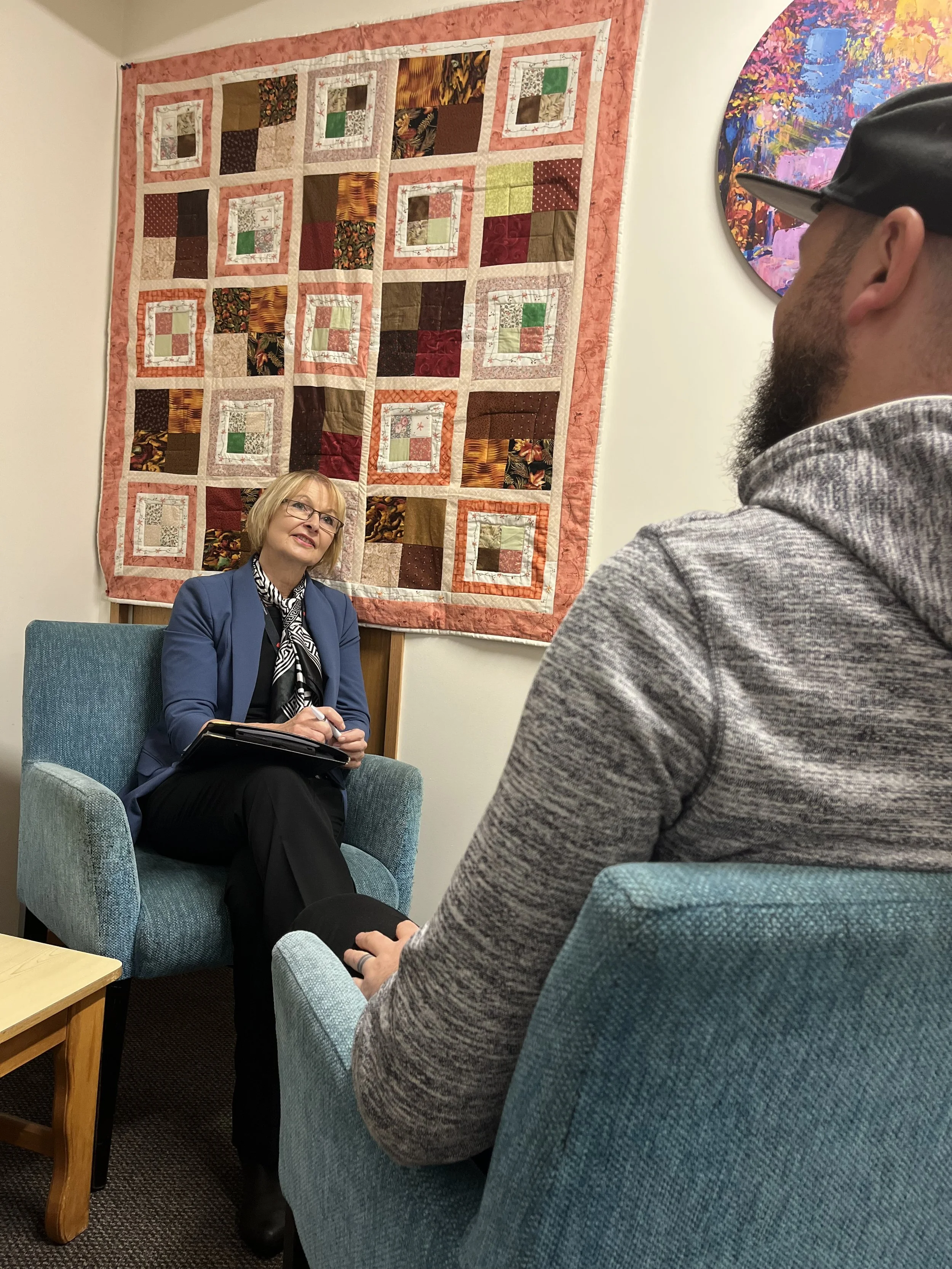
In hospital he decided to stop drinking and after meeting the detox nurse came under the care of then City Mission case manager Annette.
Some clients need support over a long period and Brian and Annette met regularly at the start and then the intervals grew longer as he grew stronger. She gave him strategies to help stop him going back to the booze. She taught him how to deal with his emotions and things like stress and anxiety which contributed to the alcohol use.
“One thing she used to say was she was holding the mirror up. I would be talking and she would just listen and then I'd take a breath or take a pause, and she'd say, ‘so what I'm hearing is’ … and it’s exactly what I needed.
“I'm an engineer, I tend to want to take something and fix it, and then it's fixed, right? It doesn't come back again. And that didn’t work with what I was going through. Annette showed me how to deal with thoughts that kept coming back and accept they would come back.”
We have now finished our work with Brian, although we will always be here for him. He’s back at fulltime work in a role that excites him, he has a loving relationship with a new partner, and he is determined to make the most of his new chance at life.
*Not his real name.